The aim of this magazine is to connect the communities of Hindu Kush, Himalaya, Karakorum and Pamir by providing them a common accessible platform for production and dissemination of knowledge.

The Mysterious Koshain aka Mankial Peak
The peak of Mankial, in Bahrain Swat which is said to be sighted from Peshawar and Cherat Pabbi.

The Mysterious Koshain aka Mankial Peak
For others, it was just an ordinary day, but for me, it was anything but ordinary. Upon waking up early in the morning, I found myself feeling unusually heavy-hearted and restless, as though I had lost something precious. I tried every possible way to find some peace of mind, but nothing seemed to work. After nearly four hours of wandering through my thoughts, a sudden idea struck me at around 10 a.m. My inner self reminded me that it had been far too long since I had put my feet through a little hardship and allowed my restless soul to wander through the vast wonders of the Almighty’s creation.
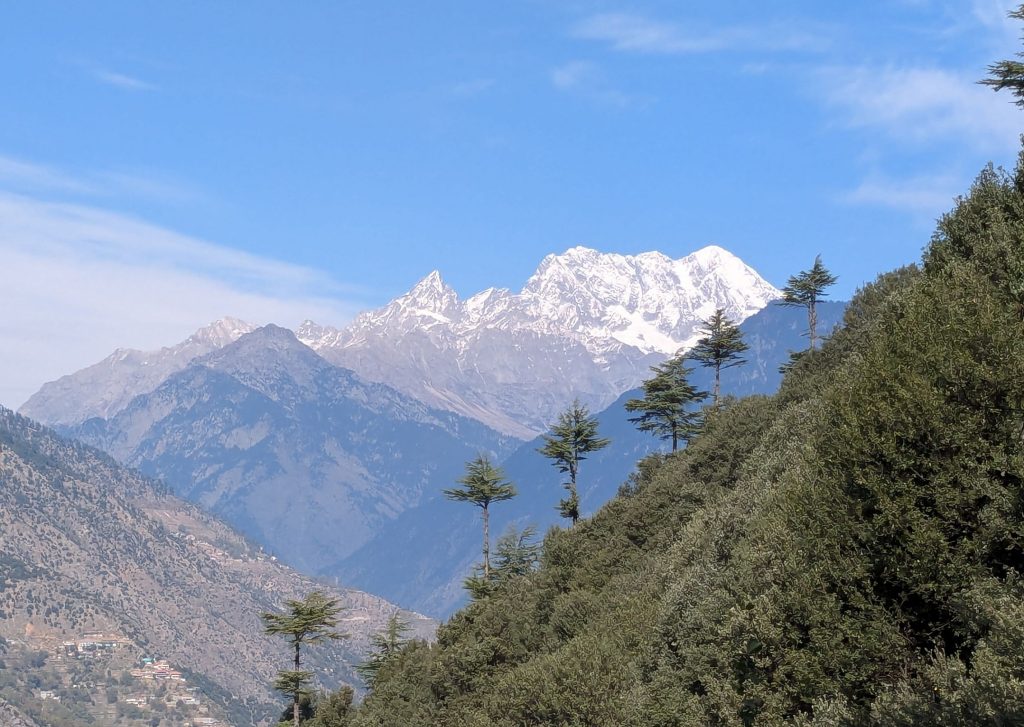
Without wasting another moment, I shared my sudden plan for an aimless adventure with my younger brother. True to his affectionate nature, he had never turned down my invitations to such spontaneous escapades. And so, we set out towards Shunji Meadow, west of Bahrain, carrying the necessary hiking gear. Little did I know when leaving home that this spontaneous hike would turn into such a memorable day. What made it truly special was that, after a long time, I would once again have the opportunity to see my Murshid close, clearly, and exchange greetings with it.
One of the downsides of having a traveller’s soul is that it never lets you rest. It keeps stirring within you whenever you see others setting out on journeys or hear stories of the heavenly landscapes scattered across the world. Your feet begin to yearn for another adventure, and your heart remains restless until you allow your soul to wander through the unparalleled wonders of the Almighty’s creation. Travelling is also an experience in which, when exhaustion finally catches up with you and you find yourself with no strength left to walk any further, you resort to sharing the secrets buried deep within your heart with your fellow traveller, almost as a last resort to forget the hardships of the journey.
Perhaps that is why it is a common practice across the world to travel with people as a way of getting to know them more closely. After all, there is hardly a better way to understand someone’s true personality than to share a journey with them. Our journey towards Shunji Banda continued along winding trails that snaked their way through dense forests and, at times, climbed almost vertically up the steep slopes. Somewhere along the way, the conversation turned to bears. We learned that humans were not the only visitors to this heavenly paradise; enormous bears also frequented these woods, and unlike us, they seemed to have more than just sightseeing on their minds.
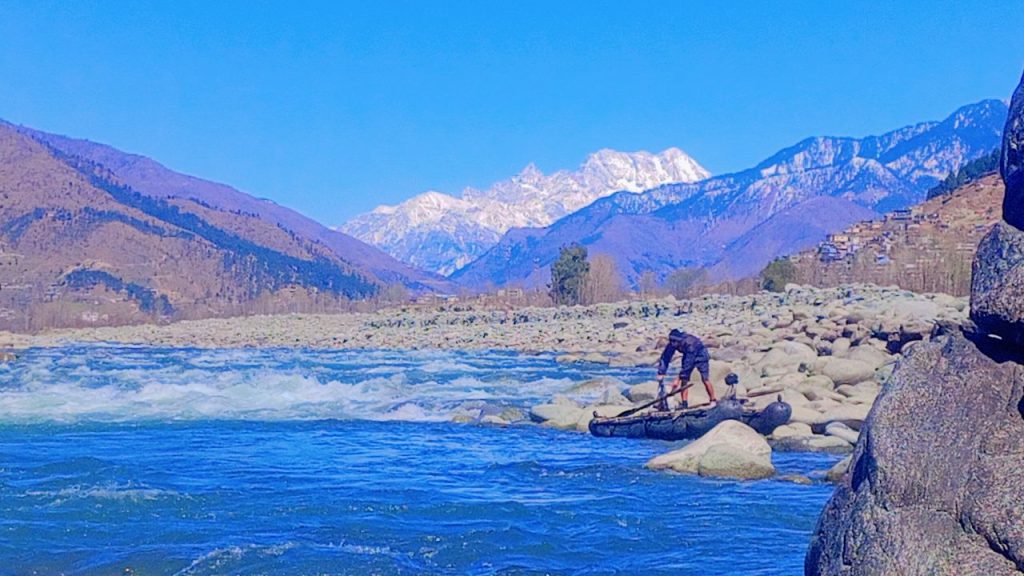
And that was it. For the rest of the journey, we remained prisoners of the fear of an unexpected encounter with a bear. It was then that a thought crossed my mind: no matter how desperately human beings seek freedom and peace, there is always some fear, some invisible chain, that stands in the way of their freedom. Lost in this curious mixture of fear and excitement, we continued our journey when, all of a sudden, I turned around and could hardly believe my eyes. I rubbed them in disbelief, only to realise that what I was seeing was indeed real. It was neither a dream nor an illusion.
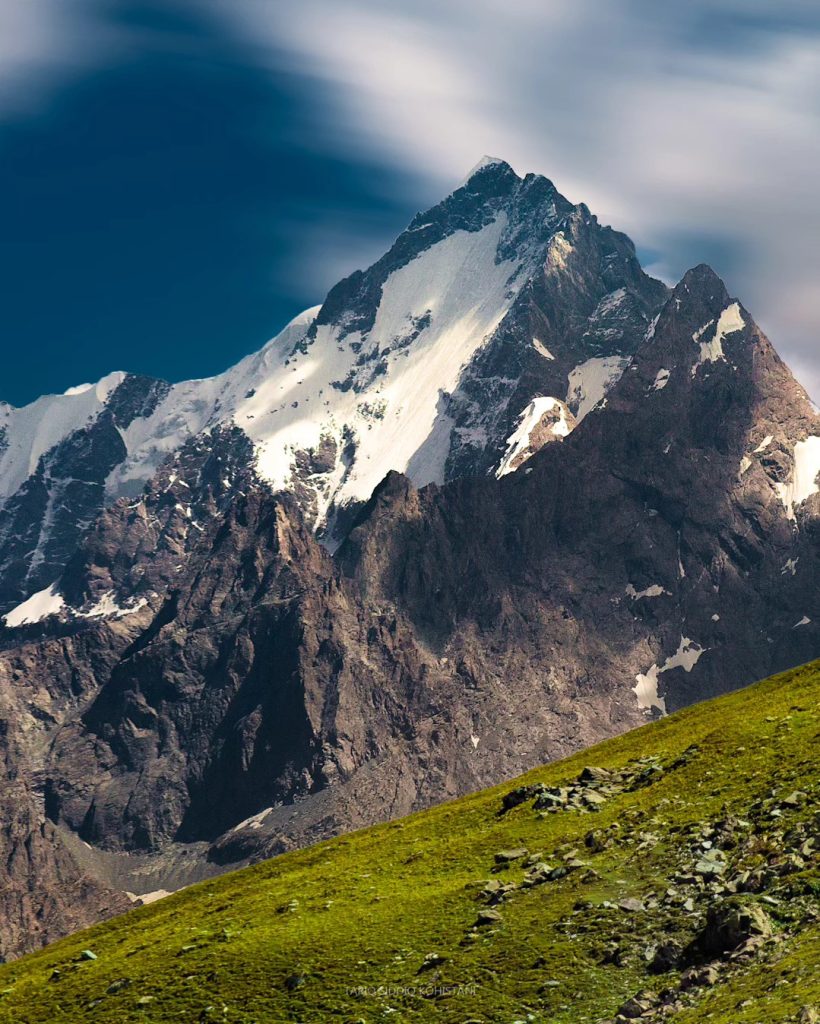
There stood the first love of my life, my majesty and mystic, the mighty Mankial Peak, locally known as Koshain (in Torwali pronounced Koʂen) in all its grandeur and magnificence, smiling at my devotion and affection from a distance. The moment my eyes were blessed with a clear glimpse of my beloved mountain after such a long separation, the restlessness within my heart vanished within seconds. The mountain’s five majestic summits, aka the Five Fingers, rising high enough to kiss the heavens, seemed to strike the deepest chords of my heart, almost as if they were reproaching me for my prolonged absence and separation. At that very moment, I renewed an old promise to myself: one day, I would return to stand before you, shake hands with you, and fulfil this long-nurtured love.
Rising to approximately 5,722 metres (18,773 feet) above sea level, Mankial Peak, affectionately known among the locals as Koshain, is the second-highest peak in the Swat Valley after Falak Sair (Plasaar). Owing to its remarkable size, distinctive formation and magnificent appearance, it is counted among the most striking mountain landscapes of the region. On my daily return journeys from Madyan, I often catch a glimpse of my Murshid from two particular locations: Bhem Gari and Panjigram. The mountain is distinctly visible from both places, making them my favourite spots for admiring its grandeur.
Interestingly, photographs of Mankial Peak also known as Mankial Tsukai (Suki in Pashto means peak) have also been taken from as far away as Peshawar’s historic Bala Hisar Fort and Jamrud in Khyber Agency. Besides these locations, the mountain can reportedly be sighted from several other parts of the province. I have had the privilege of witnessing my Murshid from a remarkably close distance at Chukail/Chugail Meadow. However, an even closer and clearer view awaited me at Beshai Meadow in Kalam. From there, the mountain presents an entirely different spectacle: all five of its magnificent summits can be seen from the northern aspect.
Standing immediately behind my Murshid are two other towering peaks, Breithorn peak and Takkai Sar/peak, both counted among the region’s highest mountains. These gigantic summits stand close to Chukail Meadow, while Takkai Sar is also visible from my hometown of Bahrain. In the local Torwali language, Takkai Sar is also known by the names Karrh Bala (Kaɾʰ Bala) and Teeriz. Nestled between these two peaks is the glacier-covered, frozen Richo Pass, where three lakes, collectively known as Sar Lakes, lie frozen for almost the entire year. It takes approximately three to four days trek to reach Richo Pass from the Sehrai Valley in Mankial. The base camps for all three mountains are approached through this very pass.
Looking at my Mystic brought back memories of our late friend, Syed Ali Shah Mian, who, alongside two other fearless companions: Muhammad Rahim and Farman Khan, successfully climbed Mankial Peak in 2021. This marked the first successful ascent of the mountain by local climbers. Before their achievement, only foreign mountaineers had reportedly managed to reach its summit decades ago. Syed Ali Shah later told us that during their Mankial Peak expedition, they were caught off guard by an extremely violent snowstorm one night. The storm trapped them in the mountains, and they narrowly escaped death.
Little did he or we know that, five years later, a similar storm would engulf him on Swat’s highest peak, Falak Sar, ultimately claiming his life. Nevertheless, my Murshid/mystic lord remains a witness to our late friend’s courage, bravery and extraordinary mountaineering spirit. Two other mountaineers from Swat, Seth Nauman Khalil and Syed Zeeshan Aziz, also belong to that rare breed of adventurers who do not shy away from challenging the mountains. Both have interdependently summited Takai Sar. They also attempted Breithorn Sar but were forced to turn back because of heavy snowfall. Conquering Mankial Peak remains another challenge on their list.
Moreover, the two independently summited Falak Sair in 2022, which is quite an extraordinary achievement. Usually, the summits of Mankial Peak remain hidden behind thick blankets of clouds, almost as though they are shyly concealing their magnificence from the world. But, thankfully, today was destined to be different. I was fortunate enough to have a clear view of my beloved Murshid, and the clouds, too, did not choose to miss the occasion. In 2024, a trio of Swat-based mountaineers comprising Syed Ali Shah Mian, Syed Zeeshan Aziz and Seth Noman Khalil became the first Pakistani team to summit Chitral’s famous Thalo Zom. Completing this challenging expedition took them ten days.
For me, however, Koshain is much more than a geographical landmark or a mountaineering destination. Wherever I travel across the two districts of Swat, whether on a hiking expedition, a trekking adventure or an ordinary journey, my eyes instinctively search for this magnificent mountain. Every time I catch even a glimpse of it, my heart begins to yearn for an embrace with this giant of the Hindu Kush. Yet, the distance between us continues to keep that long-awaited reunion out of reach. God willing, one day I, too, will make my way towards its summit to fulfil the promise I made to my Murshid.
The history of climbing Koshain, also written as Kushujan, however, dates back several decades. R. L. Holdsworth, a British mountaineer, became the first documented climber to summit this magnificent mountain in 1940, during the era of the former Swat State. He undertook the expedition alongside three companions, with the support and assistance of the then ruler of Swat. In his account, “The Ascent of Mankial Tsukai in Upper Swat”, Holdsworth provides a brief yet vivid description of the mountain and their expedition.
The account was published in the 1942 edition of the prestigious Alpine Journal. He revealed that he had first spotted the mountain from Peshawar, and its magnificent appearance immediately aroused his curiosity and inspired him to attempt its ascent. During their expedition, the climbers were accompanied by a local guide from Kamar Khuwa. At one point, they encountered a narrow rocky passage which the guide explained was frequently used by markhor. Fascinated by this discovery, the climbers named it the Markhor Path.
Holdsworth described the summit as a snow dome where three ridges converged. His account provides a vivid picture of how demanding and challenging the mountain was to climb. Its steep rocky ridges, extensive snowfields, glaciers and difficult alpine terrain presented considerable obstacles to the expedition. He also documented some of the earliest known photographs of Mankial Peak, capturing its magnificent appearance from both near and distant vantage points.
Interestingly, he mentioned that Nanga Parbat, the Dyamur, was also visible from the summit. Subsequent mountaineering records reveal that the mountain was climbed again in 1950, marking its second documented ascent. A third expedition took place in 1964, when a Cambridge University mountaineering team explored the region and climbed several of its high peaks. Their account also contains interesting details about neighbouring Breithorn. The name was given by Trevor Braham, who named it after the famous Breithorn in Zermatt, Switzerland.
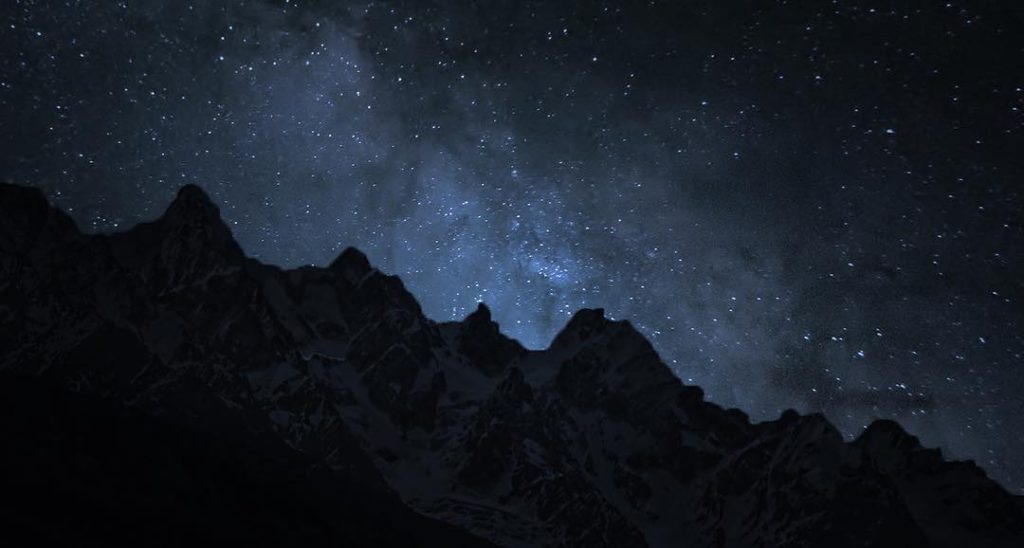
Another expedition organised in 1967 resulted in the mountain’s fourth documented ascent. It comprised four Pakistani and three Western climbers. However, the Pakistani members retreated from Camp I, while the remaining three Western mountaineers continued towards the summit and successfully reached it on September 17. Unfortunately, the descent turned into a tragedy. One climber was swept away by an avalanche, while another succumbed to extreme cold and exhaustion. Only one of the three summit climbers survived.
Despite its remarkable mountaineering history, much of Mankial Sar and its surrounding terrain remains relatively unexplored. Several glaciers, rocky passages and geographical features still lack widely recognised names, partly because of the limited number of trekking and mountaineering expeditions to this remote mountain. Local shepherds, meanwhile, have preserved fascinating mythical tales about giants inhabiting the mountain. Perhaps its enormous stature, intimidating terrain and unpredictable weather have contributed to these stories being passed down through generations.
By Shams Ud Din Torwali
Photos provided by the author

