The aim of this magazine is to connect the communities of Hindu Kush, Himalaya, Karakorum and Pamir by providing them a common accessible platform for production and dissemination of knowledge.


PART II: When the Forest Began to Listen
The Meeting in the Valley
The Wise Houses had declared that the Eastern Valleys would need to be corrected. And so the correction began. Messengers arrived carrying instructions. Surveyors arrived carrying measuring sticks. Officials arrived carrying scrolls and expressions of considerable authority.
They studied the land very carefully. They measured rivers that had never considered being measured. They inspected burrows that had never applied for inspection. They placed markers in the soil so the forest would know exactly where it was supposed to be.
But the Eastern Valleys were a difficult place to organise. The rivers wandered. The winds changed their minds. The mobs moved when the grass moved. And the burrows appeared wherever the earth allowed them. The surveyors wrote many reports about this problem.
Eventually the Wise Houses decided that the creatures of the valleys should be invited to a meeting. The official announcement explained that the purpose of the meeting was to hear local concerns. This was considered a very generous offer.
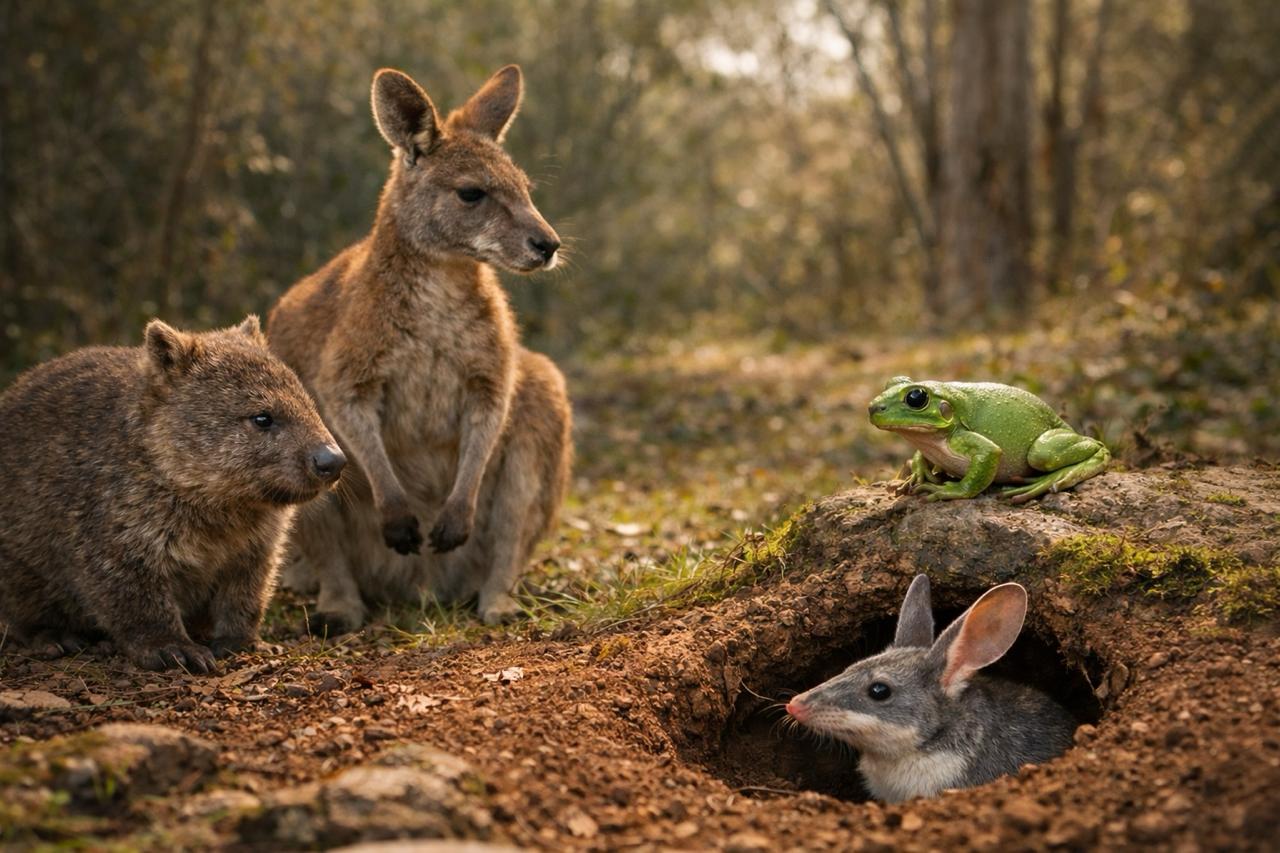
And so one afternoon, in a clearing beside the river, several creatures found themselves sitting together for the first time. The old Wombat arrived carrying the registration form for her burrow. The young Kangaroo arrived carrying the official map from her school. The Green Tree Frog arrived from the wetlands where the border ran through the reeds. And beneath the soil not far away, the Bilby listened.
At the front of the clearing, an official from the Wise Houses stood beside a large scroll. He explained that the Wise Houses had always worked for the good of the forest. The scroll contained many impressive words. Stability. Order. Responsibility. The creatures listened very politely.
When the speech ended, the Wombat raised a paw. “I would like to ask,” she said carefully, “why my burrow now requires registration.” The official consulted his scroll. “For organisational purposes,” he replied. The Wombat nodded slowly. She had suspected something like that.
Next, the Kangaroo spoke. “I would like to understand,” she said, “why our hopping paths are described as chaotic.” The official consulted his map. “They do not follow the approved routes,” he explained. The Kangaroo looked at the map. Then she looked at the plains. She did not say anything for a while.
From the reeds, the Green Tree Frog called out. “I would like to ask why my cousin now lives in another administration.” The official examined the border line. “It is necessary,” he explained, “for proper management of the wetlands.” The Green Tree Frog considered this. The wetlands had never requested management.
For a moment the clearing was quiet. Then the Wombat looked at the Kangaroo. The Kangaroo looked at the Green Tree Frog. The Green Tree Frog looked toward the soil where the Bilby was listening. And something curious began to happen.
“You were told the Kangaroos were stealing water?” the Kangaroo asked. “Yes,” said the Wombat. “And you were told the Wombats were poisoning the soil?” asked the Wombat. “Yes,” said the Kangaroo. The Green Tree Frog blinked. “I was told neither of you existed,” she said.
For a moment no one spoke. Then the Bilby laughed. It was a small laugh. A quiet laugh. A laugh that travelled through the soil and up through the clearing. Soon the Wombat laughed. Then the Kangaroo. Then the Green Tree Frog. The official did not laugh. He wrote something in his report.
And that afternoon something new appeared in the Eastern Valleys. Not a border. Not a decree. Not a carefully written scroll. Something much smaller. And much more dangerous. The creatures had begun to compare notes.
High on their hill, the Wise Houses did not yet know this. Their mirrors were still polished. Their towers still shone brightly. Their maps still looked perfectly organised. But somewhere between the burrows and the reeds, between the plains and the hidden tunnels, the creatures of the forest had begun to listen to one another. And once that began, the story of the forest would never again follow the Wise Houses’ plans. Another quiet turning in the long unfolding story of The Epic Folly.
The Panic of the Wise Houses
High upon their hill, the Wise Houses continued their work. The towers shone brightly. The banners fluttered in the wind. The mirrors remained polished so that wisdom could always be seen. But in the weeks following the correction of the Eastern Valleys, certain reports began to arrive.
At first the reports seemed small. Surveyors complained that their markers had disappeared overnight. Officials reported that creatures were crossing borders without consulting the maps. Messengers returned with documents unsigned. And some messengers did not return at all.
The Old Frogmouth read these reports carefully. Then he blinked slowly. A meeting was called.
The chamber filled as it always did. Wedge-tailed Eagles arrived with urgent proposals. Kookaburras arrived with faster proposals. The Kites arrived with calculations. The mirrors along the walls reflected rows of concerned faces.
“Creatures of the Wise Houses,” the Old Frogmouth began, “disturbing irregularities have been observed.” The chamber grew quiet. “Our surveyors report that some creatures of the Eastern Valleys are no longer following the proper arrangements.” A Wedge-tailed Eagle rose immediately: “Then the arrangements must be enforced.” A Kookaburra rose beside him: “More efficiently.” A Kite cleared his throat.:”More sustainably.”
The Old Frogmouth listened. Then he unfolded a map of the valleys. It was a beautiful map. Very neat. Very precise. Every line perfectly straight. “According to this map,” the Old Frogmouth explained, “order has already been established.” The council nodded. The map was very convincing.
“But,” said a Kookaburra cautiously, “the creatures do not appear to be following it.” The room grew uneasy. Maps were not accustomed to disagreement.
A Wedge-tailed Eagle suggested additional corrections. A Kookaburra suggested faster corrections. A Kite suggested corrective investments. The council debated for many hours. But the reports continued to arrive. Borders were being crossed. Registrations were ignored. Migration routes were being followed according to rainfall rather than regulation. The forest was behaving improperly.
At one point the Old Frogmouth paused. “Where,” he asked quietly, “is the Fairy-wren who spoke at our last meeting?” The council searched the chamber. No one had noticed when the Fairy-wren left. No one had noticed that she had not returned. The Old Frogmouth said nothing more.
Outside the towers, the wind moved through the trees. Far below the hill, the creatures of the forest were still talking. Wombats spoke with Kangaroos. Kangaroos spoke with Green Tree Frogs. Green Tree Frogs spoke across borders that no longer seemed important. And beneath the soil, the Bilby listened.
But in the towers, the Wise Houses did not yet understand what was happening. They believed the forest required more correction. More organisation. More carefully written scrolls. They believed that if the maps were redrawn with greater precision, order would surely return.
And so the council concluded that the correction of the Eastern Valleys must continue. More markers would be placed. More regulations would be written. More meetings would be held. For it had taken centuries to organise everything so neatly. And the Wise Houses could not imagine that the forest might simply stop believing them.
Far below the hill, the conversations continued. Quietly. Patiently. Like water moving through soil. And somewhere between the burrows and the plains, between the reeds and the tunnels, the forest was beginning to change. Another turning in the long unfolding story of The Epic Folly.
The Great Refusal
The Wise Houses expected resistance. They had prepared for anger. They had prepared for protest. They had prepared for disorder. The scrolls contained many procedures for dealing with such things.
But the forest did something unexpected. The forest stopped.
The Wombat did not register her burrow. She read the form again very carefully. Then she placed it beside the entrance of her tunnel where the rain slowly softened the ink.
The Kangaroo studied the official map. She memorised every border, every approved route, every carefully drawn line. Then the rains arrived. The grass moved. And her mob followed the grass as they always had.
In the wetlands, the Green Tree Frog continued to sing. She sang across the border. She sang with her cousin. She sang with the reeds and the evening wind. No permit was requested.
Beneath the soil, the Bilby continued his work. His tunnels moved quietly through the earth, crossing borders, crossing jurisdictions, crossing territories that the Wise Houses believed were separate. The soil did not object.
When officials arrived in the valleys, they found the creatures polite. Very polite. The Wombat offered them tea. The Kangaroo showed them the plains. The Green Tree Frog explained the wetlands. The Bilby remained mostly unseen but listened carefully.
The officials read their instructions. They explained the regulations. They pointed to the maps. The creatures nodded politely. Then they asked questions.
“Why,” asked the Wombat, “is my burrow in Territory Seven?” The official consulted his scroll. “For administrative clarity.” The Wombat nodded. The earth beneath her paws remained unconvinced.
“Why,” asked the Kangaroo, “must our mob follow these routes?” The official consulted the map. “For orderly movement.” The Kangaroo looked at the sky. The clouds had chosen a different direction.
“Why,” asked the Green Tree Frog, “does this line divide the wetlands?” The official studied the border. “For proper management.” The Green Tree Frog looked at the water. The water did not appear to recognise the line.
The officials returned to the towers with many notes. Their reports were careful. Very careful. They described a situation that was difficult to categorise. The creatures were not hostile. They were not rebellious. They were not disorderly. They were simply continuing to live.
In the towers, the Wise Houses read the reports with increasing concern. The scrolls contained procedures for rebellion. The scrolls contained procedures for conflict. But nowhere in the libraries of the Wise Houses was there a procedure for creatures who listened politely and then continued to follow the rivers, the winds, the soil, and the seasons.
Far below the hill, the conversations continued. Wombats spoke with Kangaroos. Kangaroos spoke with Green Tree Frogs. Green Tree Frogs spoke with creatures across borders that had grown increasingly invisible. And beneath the soil, the Bilby listened.
The forest had not declared war. The forest had not organised a rebellion. The forest had simply refused to believe the maps. And once that happened, the careful system that had taken centuries to organise so neatly began, very slowly, to loosen. Another quiet turning in the long unfolding story of The Epic Folly.
The Forest Finds Its Voice
For many seasons, the creatures of the forest had been told that they were different. Not merely different. Opposed. The scrolls of the Wise Houses had explained this very carefully. Wombats were territorial. Kangaroos were unpredictable. Green Tree Frogs were frivolous. Creatures of the plains did not understand the wetlands. Creatures of the wetlands did not understand the burrows. Creatures beneath the soil did not exist. The system was very clear.
And for a long time, the creatures of the forest had believed it. Wombats mistrusted the Kangaroos. Kangaroos avoided the wetlands. Green Tree Frogs sang only among reeds. The Bilby listened quietly and said very little. The forest had become a place of many neighbours who had forgotten how to speak.
But the conversations that began in the valleys did not stop. They grew. Slowly. Carefully. Like roots finding one another beneath the soil.
One evening, the Wombat spoke to the Kangaroo: “You move across the plains; how do you know where to go?” The Kangaroo looked toward the horizon: “The wind tells us”, she said. The Wombat considered this. Burrows had a different relationship with the wind.
Another day, the Green Tree Frog spoke to the Bilby. “You live beneath the soil,” she said. “What do you see there?” The Bilby paused thoughtfully. “I see the rivers before they appear.” The Green Tree Frog blinked. Rivers were usually noticed after they arrived.
The creatures began to realise that the forest had always spoken in many languages. The language of the wind. The language of the soil. The language of the rivers. The language of movement. The language of roots. The Wise Houses had written scrolls about these things. But the scrolls had been written from very high towers.
At first the conversations were awkward. The Wombat spoke of land. The Kangaroo spoke of movement. The Green Tree Frog spoke of water. The Bilby spoke of deep earth. Sometimes they misunderstood each other. Sometimes they argued. Sometimes they returned to old suspicions that the Wise Houses had carefully planted. But the conversations continued.
And slowly, something remarkable began to happen. The Wombat began to understand why the Kangaroo moved so much. The Kangaroo began to understand why the wetlands mattered. The Green Tree Frog began to understand how the soil carried water. The Bilby began to understand the shape of the sky. The forest was beginning to remember itself.
Soon the creatures realised that the maps of the Wise Houses had never truly described the forest. They had only described the view from the towers. So the creatures began to draw another kind of map. Not on parchment. Not with rulers. Not with straight lines. But with stories. With memory. With listening.
The Wombat remembered the old tunnels. The Kangaroo remembered the migration paths. The Green Tree Frog remembered the seasonal floods. The Bilby remembered where the underground waters met the roots of trees. Together they began to understand how the forest actually lived.
High upon their hill, the Wise Houses continued their meetings. They studied reports. They adjusted maps. They wrote new scrolls to improve the system. But the creatures of the forest were no longer waiting for instructions. They were learning to speak to one another again. And once the forest remembered its own language, the towers would no longer be able to explain it. Another quiet turning in the long unfolding story of The Epic Folly.

