The aim of this magazine is to connect the communities of Hindu Kush, Himalaya, Karakorum and Pamir by providing them a common accessible platform for production and dissemination of knowledge.


PART III: After the Maps Faded
The Collapse of the Old Maps
High upon the hill, the Wise Houses continued their work. Meetings were held. Reports were written. Maps were updated. Corrections were carefully planned. From the towers, the forest still appeared orderly. Lines were straight. Borders were clear. Territories were neatly labelled. The system looked perfect.
But far below the hill, the forest was becoming difficult to describe.
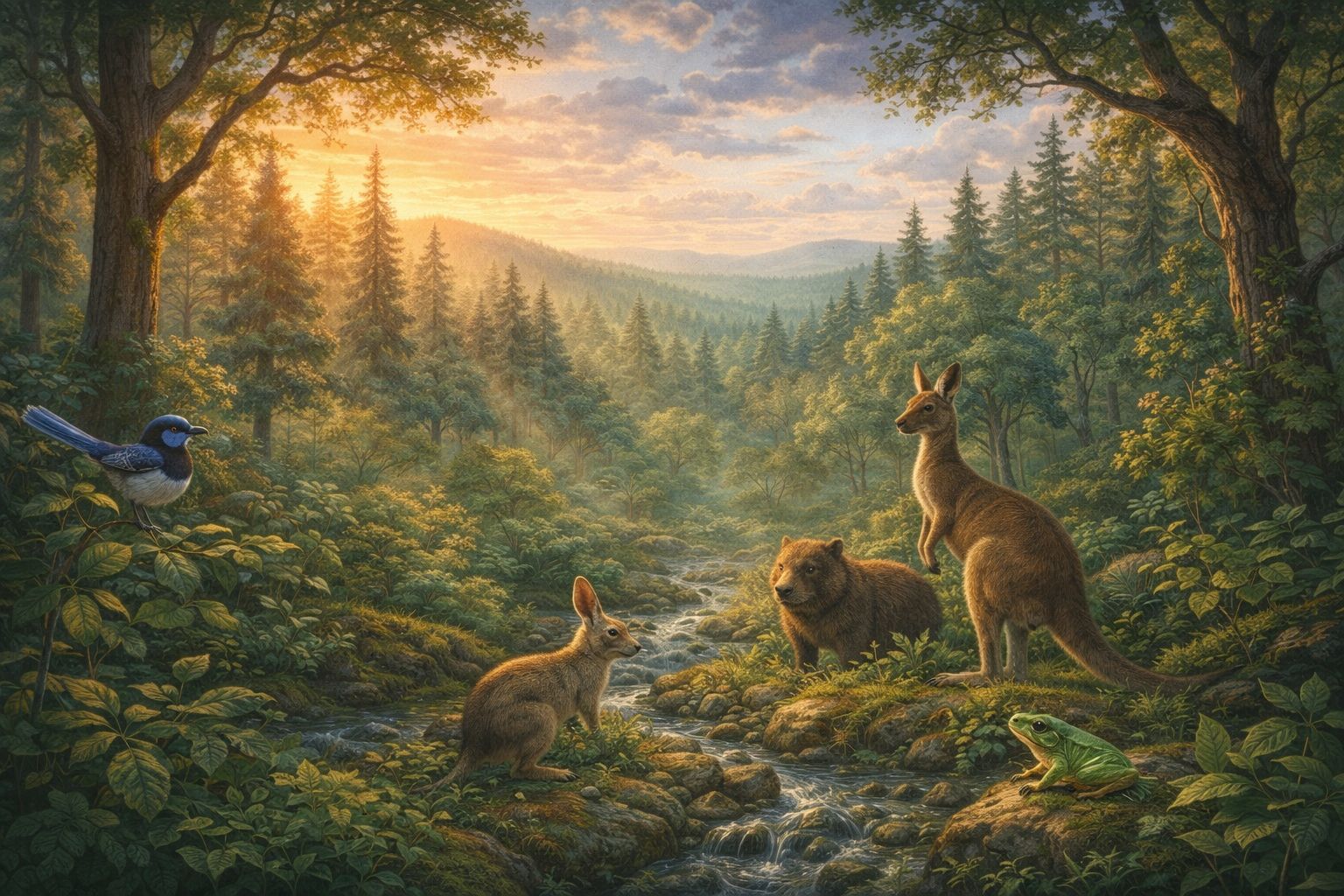
The Kangaroos continued to bound. They followed the grass. They followed the rain. They followed the wind that moved across the plains. The new maps had drawn their paths into tidy routes. But the wind had not read the maps.
In the wetlands, the Green Tree Frogs sang. They sang at dusk. They sang at dawn. They sang across borders that passed quietly through reeds and water. The frogs did not argue with the lines. They simply did not notice them.
The Wombats continued to dig. Their tunnels moved slowly through the earth, crossing territories that the Wise Houses had labelled carefully and repeatedly. The soil did not object.
Beneath it all, the Bilby listened. He listened to the underground rivers that moved through stone and root without consulting any scrolls. Sometimes the rivers changed direction. Sometimes they appeared in places no map had predicted. The Bilby was not surprised. Rivers had always been like this.
But in the towers, something troubling began to happen. The reports no longer matched the maps. Officials arrived in valleys that appeared perfectly organised on parchment yet refused to behave as expected. Borders could not be found. Categories were misunderstood. Regulations were politely ignored.
The Wise Houses studied the problem. They called new meetings. They produced more detailed maps. They added more colours. They added symbols. They added explanations written in very careful language. Surely, they reasoned, the difficulty was simply a lack of clarity.
But the forest was becoming increasingly unclear. Wetlands expanded during heavy rains. Burrows connected to tunnels no surveyor had noticed. Paths appeared where creatures had begun walking together. The forest was moving.
The Wise Houses found themselves studying maps that described a forest that no longer existed.
In one tower, a Kookaburra noticed that three borders now crossed the same river. In another tower, a Wedge-tailed Eagle discovered that two territories claimed the same valley. In a quiet room, a Kite calculated that the cost of correcting the forest had become very large.
The Old Frogmouth called another meeting. He blinked slowly. He spoke carefully. “Creatures of the Wise Houses,” he declared, “the forest appears to be behaving unexpectedly.” The council considered this. They adjusted their scrolls. They debated new strategies. They congratulated one another for their wisdom.
Far below the hill, the creatures continued speaking to one another. They continued sharing stories. They continued following the wind, the water, the soil, the seasons. The forest was learning to live without waiting for instructions.
And once the forest began to live beyond the maps, the maps themselves began to fade. Another quiet unraveling in the long unfolding story of The Epic Folly.
Relearning the Forest
By the time the old maps had begun to fade, the creatures of the forest understood something important. Refusing the system had been necessary. But refusal alone could not build a new world.
For a long time the forest had been organised by instructions written in distant towers. The creatures had been told where to live, how to move, who to trust, who to fear. The scrolls had spoken loudly. And the forest had grown quiet.
Now the scrolls no longer ruled. But the silence remained.
So the creatures began to gather. Not in towers. Not in halls of marble. But in clearings where the forest floor felt wide enough for listening.
The Wombat arrived first. She brought stories of the soil. Stories of tunnels that had existed long before the borders were drawn. Stories of roots that travelled quietly beneath territories that the Wise Houses believed were separate.
The Kangaroo came next. She spoke of movement. Of seasons that could not be divided by lines. Of winds that carried rain from valley to valley. Of paths that her ancestors had followed long before maps had tried to organise the plains.
The Green Tree Frog came with the evening. She spoke of water. Of wetlands that expanded and retreated with the breathing of the earth. Of rivers that curved—not because they were careless, but because they were listening to the land.
Last came the Bilby. He moved slowly from the soil. For a long time he had only listened. Then he spoke of the deep earth. Of underground rivers. Of the places where roots shared water with distant trees. Of the quiet work that kept the forest alive without ever appearing on maps.
At first the gathering was difficult. The Wombat spoke of land. The Kangaroo spoke of movement. The Green Tree Frog spoke of water. The Bilby spoke of depth. Their languages did not always match. Sometimes they misunderstood. Sometimes old suspicions returned. For the divisions of the Wise Houses had lived in the forest for many generations.
But the creatures continued listening. Slowly they discovered something remarkable. None of them understood the entire forest. But together they understood more.
The Wombat knew where the soil could hold roots. The Kangaroo knew how the winds moved across the plains. The Green Tree Frog knew when the waters would rise. The Bilby knew where the hidden rivers met the trees. The forest was not one system. It was many knowledges woven together.
So the creatures began to ask new questions. Not: Who rules the forest? But: How do we care for it? Not: Who owns the rivers? But: How do we listen to them? Not: Which creature stands above the others? But: How do we remain in balance?
There were no quick answers. The forest had been divided for a very long time. Integrity would take time to grow again. But the creatures had already begun. They had begun to speak. They had begun to listen. They had begun to remember that the forest had always been a shared home.
High upon the hill the towers still stood. Their mirrors still shone. Their banners still moved in the wind. But the forest no longer waited for the towers to explain the world. And somewhere beneath the roots and rivers, a different kind of wisdom was beginning to grow. Another quiet renewal in the long unfolding story of The Epic Folly.
The World After the Folly
Long after the old maps had faded and the meetings in the towers had grown quiet, the forest continued to change. Not quickly. Not loudly. But steadily.
The rivers still curved through the valleys. The winds still crossed the plains. The wetlands still breathed with the seasons. The forest had never stopped being alive. It had only been waiting to be heard again.
In the clearings, the creatures continued to gather. Wombats brought stories of the soil. Kangaroos brought news of the moving grass. Green Tree Frogs sang of rain arriving from distant hills. And the Bilby listened to the deep waters beneath them all.
Sometimes they disagreed. Sometimes the Wombat believed a tunnel should remain. Sometimes the Kangaroo believed a path must move. Sometimes the Green Tree Frog insisted the wetlands must expand. And sometimes the Bilby quietly reminded them that the earth was older than any argument.
The conversations were not always easy. But they were honest. And honesty had become a new kind of strength.
High upon the hill, the towers still stood. Their stones remained strong. Their mirrors still shone in sunlight. But the towers no longer explained the forest. They had become something else.
Young creatures sometimes climbed the hill. They walked through the silent halls. They studied the old scrolls. They traced the borders drawn across maps that no longer matched the land. They wondered how creatures so intelligent could have believed that the forest would obey straight lines.
Sometimes the young ones laughed. Sometimes they felt sadness. And sometimes they carried the old maps down the hill—not to follow them, but to remember.
For the creatures of the forest understood something their ancestors had learned slowly. The Folly had not been a single decision. It had been a way of thinking. The belief that wisdom lived in towers. The belief that maps could command rivers. The belief that one voice could organise a living world.
Now the forest knew better. Wisdom was not high above. It moved through roots, through winds, through waters, through the careful listening of many creatures speaking together.
And so the forest continued its work. Learning. Listening. Remembering. Reimagining. Not building towers, but tending to the living world that had always been there.
Far above the valleys, the towers stood quietly on their hill. No longer rulers. No longer judges. Only reminders. Reminders of a time when wisdom believed itself to be alone.
And deep within the forest, among roots and rivers and voices once divided, a different story continued to unfold. A story not of conquest but of care. Not of correction but of understanding. Not of towers but of shared ground.
This was the world that slowly grew after the long unravelling of The Epic Folly.
Epilogue: The Fairy-wren’s Return
Long after the meetings in the towers had ended, and the forest had begun to find its own voice again, a small Fairy-wren returned to the hill.
The climb was not difficult. The path was quiet. Grass had begun to grow between the stones.
The Fairy-wren had once sat in the council hall long ago, when the Wise Houses had first declared their great correction. She remembered the polished mirrors. The serious speeches. The maps spread carefully across the table. She remembered lifting a small wing and asking a simple question.
Perhaps we should listen to the forest.
At the time, no one had thought that suggestion very helpful.
The Fairy-wren walked slowly through the towers. Dust rested on the old scrolls. Maps hung along the walls, their borders bright and confident, their rivers straight and obedient, their territories perfectly arranged. The Fairy-wren tilted her head. Outside the windows, the real forest moved.
The rivers curved. The plains shifted with the wind. The wetlands shimmered in evening light. And somewhere below, Wombats, Kangaroos, Green Tree Frogs, and Bilbies were still speaking to one another.
The Fairy-wren opened one of the old scrolls. It explained, in very careful language, how the forest ought to behave. She read it politely. Then she closed it again.
From the highest balcony she looked out across the valleys. Smoke from cooking fires rose gently through the trees. Paths moved between clearings. Voices carried through the air. The forest sounded alive.
The Fairy-wren laughed softly. Not unkindly. Just a small laugh for the long journey the forest had taken.
“Imagine,” she said to the wind, “all that trouble simply to learn how to listen.”
Then she opened her wings. The towers were quiet now. They had done their work as reminders. The Fairy-wren rose into the sky and glided down toward the forest, where the conversations were still unfolding.
And somewhere between the roots and the rivers, between memory and imagination, between the past and the world still being made, the story continued. Not as a warning. Not as a legend. But as something the forest would never again forget.
The long story of The Epic Folly.

