The aim of this magazine is to connect the communities of Hindu Kush, Himalaya, Karakorum and Pamir by providing them a common accessible platform for production and dissemination of knowledge.


PART I : The Towers and Their Maps
The Wise Houses on the Hill
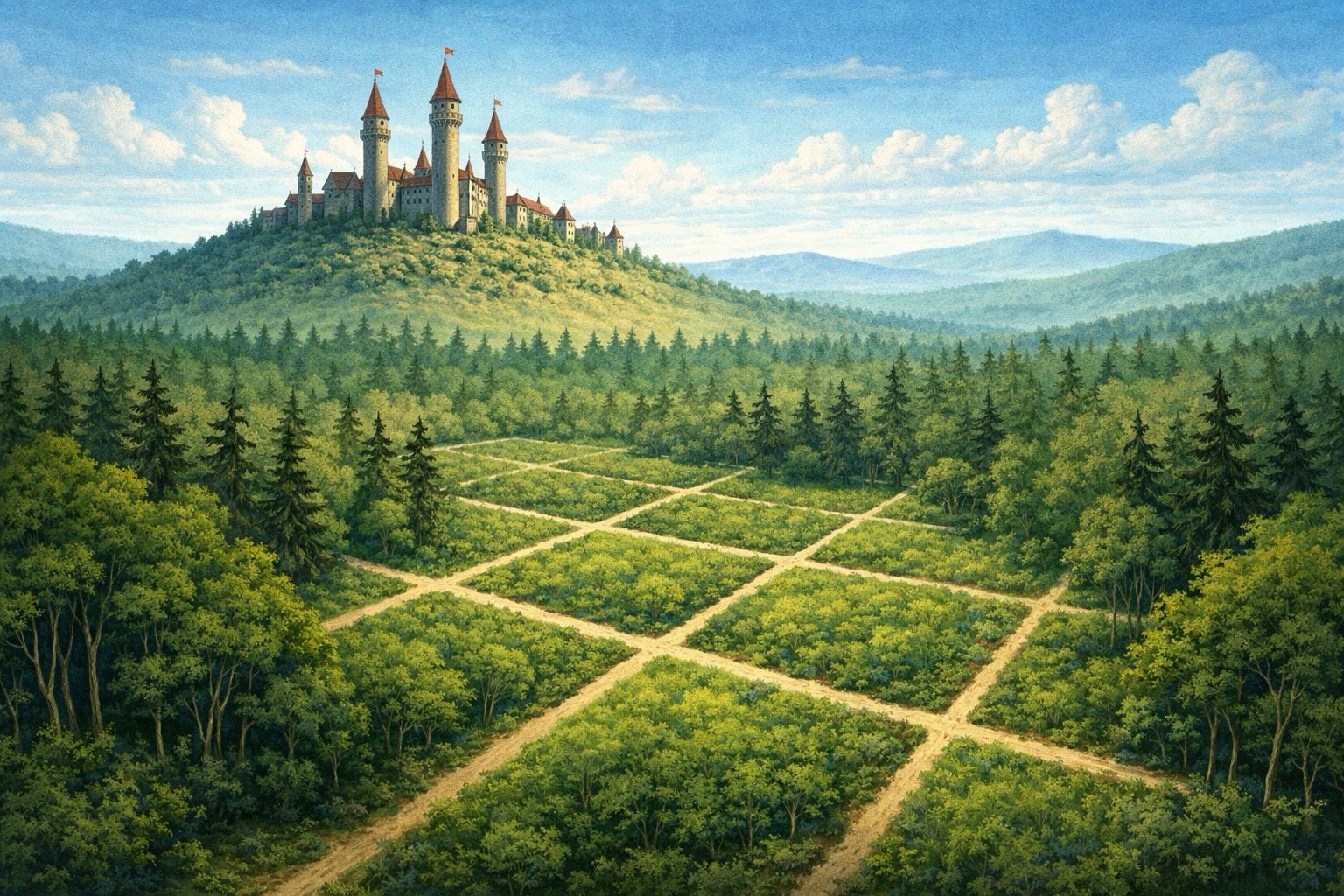
On the tallest hill in all the Great Forest stood a cluster of houses, tall and magnificent. Their towers rose high. Their banners shone bright. And their mirrors—ah, their mirrors—were polished so carefully that those who lived inside them could look and always see wisdom, nobility, necessity. Because of this, the creatures of the towers became known as The Wise Houses. Or rather, that is what they called themselves.
From their hill, the Wise Houses watched the forest. They kept maps of every valley, charts of every river, records of every burrow and every nest. Their libraries overflowed with scrolls explaining which creatures were civilised and which creatures were troublesome. They possessed another remarkable gift: whenever something went wrong anywhere in the forest, the Wise Houses were certain someone else had caused it. And whenever this happened, the Wise Houses held meetings.
One morning, a great meeting was called. Bells rang through marble halls. Messengers hurried along corridors. Advisers arrived carrying maps, charts, and expressions of enormous seriousness. At the centre of the chamber, the Old Frogmouth of the tallest tower blinked slowly. This blink was well known. It meant something important was about to be said. “Creatures of the Wise Houses,” the Old Frogmouth declared, “disturbing developments have been observed in the Eastern Valleys.” A murmur spread through the chamber. The Eastern Valleys were very far away. Few among the Wise Houses had ever visited them. But they appeared frequently on maps, which everyone agreed was almost the same thing.
“What kind of disturbance?” asked a Wedge-tailed Eagle from the Western Tower. The Old Frogmouth spread his wings across a large map. “Unpredictable creatures,” he said gravely. “They refuse to behave according to our expectations.” Gasps filled the room. This was a serious accusation. For generations, the Wise Houses had worked very hard to ensure that all creatures in the Great Forest behaved exactly as expected. They had drawn borders across the forest floor. They had divided rivers into tidy sections. They had written long scrolls explaining who belonged where, who owed loyalty to whom, and who was allowed to speak. It had taken centuries to organise everything so neatly. And now—according to the Old Frogmouth—some creatures were behaving improperly.
The council debated for hours. The Wedge-tailed Eagles recommended decisive action. The Kookaburras recommended swift action. The Kites recommended profitable action. Only one small voice rose from the back of the hall. A Fairy-wren lifted a hesitant wing. “Perhaps,” the Fairy-wren said quietly, “we should first ask why the creatures of the Eastern Valleys are upset.” The hall fell silent. The Old Frogmouth turned his head slowly. “My dear Fairy-wren,” he said kindly, “that would only complicate matters.” The council nodded. After all, the Wise Houses had never maintained order by asking inconvenient questions.
And so, after careful debate and several beautifully phrased speeches about peace, stability, and responsibility, the council reached a conclusion. The Eastern Valleys would need to be corrected. Trumpets sounded. Declarations were issued. Messengers carried news throughout the forest of the Wise Houses’ courageous decision to protect the world.
Far below the towers, the creatures of the Great Forest listened. Some were frightened. Some were angry. Some were simply tired. For the Wise Houses had been correcting the forest for a very long time. But something unusual was beginning to happen. Creatures who had long been told they were enemies were beginning to notice something strange: the corrections of the Wise Houses seemed to cause most of the trouble in the forest.
High upon their hill, the Wise Houses celebrated the beginning of a grand and necessary campaign. They believed they were beginning a story of wisdom. They did not realise they had just begun The Epic Folly.
The Drawing of the Lines
Long before the meeting in the marble halls, long before the Wise Houses declared their corrections, the forest had been a different place. Rivers wandered as they pleased. Animals travelled as seasons shifted. Burrows appeared where the soil was soft. Songs carried across valleys without asking permission. No creature owned the forest. And the forest belonged to all.
But the creatures of the tall towers saw the forest differently. They climbed the hill and looked down upon rivers, upon valleys, upon burrows, upon nests. And from that height they discovered a remarkable truth. Everything below them looked untidy.
The rivers did not run straight. The herds did not stay still. The burrows appeared wherever the earth allowed them. The creatures sang in languages the towers did not understand. To the Wise Houses, this was not life. This was disorder.
So the Wise Houses began their work. They brought maps. They brought rulers. They brought scrolls. They brought very serious expressions. And slowly, patiently, carefully, they began to organise the forest.
First they renamed things. The wide plains became Territories. The valleys became Zones. The rivers became Boundaries. The hills became Jurisdictions. Creatures who had always known the forest by story now learned it had official names.
Then the Wise Houses began dividing. They drew lines across the forest floor. Straight lines. Very neat lines. Lines that travelled through rivers, through grasslands, through burrows, through swamps. Lines that divided cousins and separated nests that had always shared the same trees.
Some creatures asked why the lines were there. The Wise Houses explained the lines were necessary for order. And order was necessary for civilisation. This explanation was written down very carefully in several scrolls.
But the Wise Houses were not finished. Dividing the forest was only the beginning. Next they divided the creatures.
Creatures who built upward were called advanced. Creatures who lived close to the ground were called simple. Creatures who burrowed were suspicious. Creatures who migrated were unreliable. Creatures who sang too often were frivolous. Creatures who asked questions were troublesome. And creatures who did not appear on the maps were said not to exist. The system was elegant. Everything had a category. Every creature had a place. Every river had a purpose. Every forest path had a regulation. It had taken centuries to organise everything so neatly. And slowly the creatures of the forest began to believe the scrolls. Wombats wondered if their burrows really were improper. Kangaroos wondered if their movements across the plains were truly chaotic. Green Tree Frogs wondered if their songs really were excessive. Even the rivers began to hesitate when crossing the Wise Houses’ lines.
But the forest remembered. The soil remembered where the water flowed. The winds remembered where the herds travelled. The roots remembered which burrows shared the same earth. And somewhere beneath the maps, beneath the borders, beneath the carefully written scrolls, the forest waited. For systems built on mirrors can only last as long as the reflections remain believable. And one day the creatures of the forest would begin to notice that the lines, the categories, and the careful explanations had not made the forest better. Only divided. And when that day came, the Wise Houses would discover that dividing the world had been the beginning of their greatest mistake. Another chapter in the long unfolding story of The Epic Folly.
Creatures of the Divided Forest
Far from the hill where the Wise Houses stood, far from the marble halls and their careful maps, the forest continued to live. Seasons arrived as they always had. Rivers followed their quiet memories. Roots travelled through soil without consulting any scrolls. And the creatures of the forest went about their days.
In the Eastern Valleys lived an old Wombat. Her family had lived there for generations. Their burrows ran deep through the earth, woven together like stories told over many winters. One autumn morning a messenger arrived carrying a document sealed with the mark of the Wise Houses. The Wombat read it slowly. Her burrow, it explained, was now located in Territory Seven. It would need to be registered. She looked at the paper for a long time. Then she looked at the ground beneath her paws. The ground did not appear to have changed.
Across the plains a young Kangaroo bounded lightly through the grass. Her mob had travelled across the same open country for longer than anyone could remember. They followed the rains. They followed the grass. They followed the winds that knew the shape of the land. But recently the Kangaroo had learned—in a school established by the Wise Houses—that her people’s movements were chaotic. Unregulated. Improper. She had listened carefully. She had studied the maps. But every season when the rains returned, her legs still carried her across the old plains.
In the wetlands a Green Tree Frog sang. Her voice rose with the evening mist, crossing reeds, crossing pools, crossing a thin line drawn carefully through the middle of the swamp. On one side of that line the Wise Houses had declared Northern Wetland Administration. On the other side, Southern Wetland Administration. The Green Tree Frog’s cousin lived just beyond the line. They still sang to each other every night.
Deep beneath the soil a Bilby worked quietly. The Wise Houses’ maps showed the land above. But they showed nothing of the tunnels below. Because of this, the Wise Houses had concluded that nothing lived there. The Bilby had read this in a report once. He found it very interesting.
Life in the forest continued. But the lines drawn by the Wise Houses did not sit quietly. They passed through rivers that had never stopped to consider borders. They passed through burrows that had never asked for permission. They passed through migration paths older than any scroll. Sometimes the creatures argued about them. Sometimes they tried to follow them. Sometimes they forgot they were there. But the lines remained. Carefully drawn. Very straight. Very neat.
And yet something curious was beginning to happen. The Wombat reading the registration form, the Kangaroo studying the official maps, the Green Tree Frog singing across the border, and the Bilby listening beneath the soil—each of them was beginning to notice the same quiet truth. The forest they lived in did not resemble the forest described by the Wise Houses.
They did not yet know what this meant. They did not yet know that others were noticing the same thing. They did not yet know that the lines and categories and careful explanations were beginning to lose their power. But somewhere between the rivers and the roots, between the burrows and the migrating herds, a new conversation was beginning to form. And when the creatures of the forest finally began to speak to one another, the Wise Houses would discover that the system they had spent centuries organising so neatly had begun to unravel. Another quiet turn in the long unfolding story of The Epic Folly.

