The aim of this magazine is to connect the communities of Hindu Kush, Himalaya, Karakorum and Pamir by providing them a common accessible platform for production and dissemination of knowledge.

The Journey of Resistance by the Save River Swat Movement (Darya-e Swat Bachau Tehreek) against the Madyan Hydropower Project

The Journey of Resistance by the Save River Swat Movement (Darya-e Swat Bachau Tehreek) against the Madyan Hydropower Project
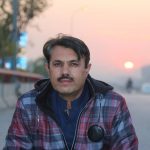
Zubair Torwali
(These remarks were presented at the jirga held in Bahrain on 21 November 2025 under the auspices of the Save River Swat Movement.)
We are a nation. We have our own land, our own language, our own culture, and our own history. We consider ourselves distinct from other people, and they, too, regard us as different from themselves. We have our own customary laws, our own traditions, our own code of conduct. We are the original and ancient inhabitants of this land. There is no evidence of anyone living here before our ancestors. We call this land our homeland. Even today, our people who live in cities like Karachi, Hyderabad, Rawalpindi and elsewhere still refer to this ancestral region as “watan”—as in tu watan ge ke bedu, watana ke wad. Our bond with our land is centuries old. We love its mountains, forests, streams, pastures (baan), glaciers (pahim), villages, lakes, springs, and trees. Our very sense of self cannot be imagined without them. That is why people often taunt us, saying, “Other people love their body, but the Kohistanis love their homeland.”
One of our poets has said:
“Our homeland—precious, pure in its air and water;
Its heaven-sent bounty reigns supreme over all beauty.”
It is the water, the air, and the climate of our homeland that keep us alive—and that attract tourists. Tourism is an essential part of our economy.
“My homeland gives me healing through its air and climate;
People from other lands come here for its beauty.”
Our language has given names to every corner of this region—every rock, every ravine, every cliff, every pass, every spring, every mountain, every field, every stream and pasture. Torwali is Indo-Aryan in origin, yet it contains abundant pre-Aryan and Gandharan elements. The poetry of our language is full of metaphors drawn from our land, geography, and culture.

Our customary system still survives. We distribute natural resources, especially forests and communal lands—through the dheemi system. In areas where the tribal doutri system exists, even there the dheemi system is prevalent at lower levels. This unique practice is largely confined to our region and has existed since ancient times.
In our local climate traditions, the seasonal calendar of Gurnal’s Bahadar kaga, the sage, is still used by many for agriculture. Likewise, every village has its own traditional water distribution system—Jay Yaab, Gurnal, Derell, Tuwal, Kamal, Menekhal—still functioning in Paran Gam, Bhim Garhi, Bhonim Garhi, and across the region.
We love our rivers, mountains, springs, glaciers, pastures, and alpine flowers:
“This beloved height is my true homeland;
Wherever I look, I see its beauty.
The flowers bloom like gardens,
The high cliffs tower proudly;
This air and water bring life—
My homeland is Kohistan.”
Because our homeland is blessed with such beauty, natural resources, and diversity, it attracts the interest of various companies, corporations, departments, and governments.
“Beauty itself becomes misfortune,
For it draws the evil eye.”
In the heart of Swat Valley, Bahrain, the Daral River once surged with great force, cooling the entire region in summer. Standing on the Daral bridge in June and July felt like standing beside a stream in paradise.
The icy spray refreshed the body and soul. Every child’s memories include the Daral. It cooled the surrounding homes. Even in summer, fans were unnecessary. The canals leading to the watermills created scenes of breathtaking beauty. Children played along its banks; elders walked proudly beside it; women fetched water from its pools. Our fields flourished because of it. Our lanes remained clean and cool. We drank from the sweet springs flowing into it. This river was a sign of our goddess, Dara. Flowing from the heights, cascading into waterfalls, cutting through mountains, this river was a divine gift. But companies soon fixed their gaze upon it.
The crisis of electricity shortage became an excuse. Some people drafted a report, and in the name of “development,” a hydropower project was imposed. How much electricity would be produced did not matter; what mattered to officials and governments was profit.
We saw disaster coming. We resisted. That resistance forced the Asian Development Bank,the financier, to withdraw. But the government then applied the old colonial formula of its British masters: it inflamed old disputes and divided us into tribes to weaken collective resistance. Promises were made, illusions shown, jobs offered. This destruction was packaged as development.

Today, mosquitoes breed along the Daral even in October and November. The Daral powerhouse opens and closes the water flow at will, drying the river whenever it wants. When the Shonji tunnel fills with water, the company suddenly releases water without warning. Children caught in the middle of the river would have died had our brave young men—who learned swimming in the Daral—not rescued them. Sadly, no road was blocked, no protest held!
The tragic story of the Daral teaches us repeatedly: protect your rivers, your forests, your pastures. Become a nation, united, and think of all!

Now this same “brave company” has set its eyes on our great river—Ghen Nheid (the Swat River)—and all its tributaries. Besides three major projects on the Swat River itself, at least 15 additional schemes have been identified on its tributaries.
Among these 18 projects, the three largest between Madyan and Kalam are:
- Madyan: 207 MW
- Asrit Kedam: 229 MW
- Kalam–Asrit: 239 MW
Total: 675 MW
Additionally, Gabral–Kalam is 88 MW and Gorkin–Matiltan is 84 MW.
Other feeder projects include two more on Daral, and others on Kedam, Gurnai, Mankiyal, Gabral, and Utror.

Although these projects appear to be run by PEDO and various private entities, the real financing comes from global financial institutions like the World Bank, the Asian Development Bank, and their allied bodies.
Among these, the Madyan Hydropower Project is being declared a priority project by PEDO and the provincial government. They intended to start work in January this year, but could not—because of the resistance of the Save River Swat Movement.
When PEDO and the Provincial Environmental Agency held a public hearing at Madyan Hotel in July 2023, people from Bahrain and surrounding areas forcefully attended and opposed the project. Their deep wounds from the Daral project were still fresh.
Yet the Environmental Agency issued an NOC to PEDO. A year later, in July 2024, the Save River Swat Movement formally launched a powerful resistance against the Madyan project, which continues with full strength to this day.

The movement decided to confront the project’s “lord”—the financier. Thus, from August 2024 onward, we began writing formal complaints to the World Bank and demanded a review of the project.
The World Bank and PEDO have admitted their mistakes, and the project has not yet started—but it is clear they have not withdrawn.
Over the past 15 months, we have exchanged hundreds of letters with the World Bank. Numerous meetings have been held in Peshawar, Islamabad, and online, some attended by PEDO. Dozens of meetings have also been held with PEDO under the oversight—and helplessness—of the district administration. We have also informed several other international organizations, even reaching the United Nations.
Local communities have held jirgas in every village. On 23 August 2024, a large demonstration was held in Bahrain. On 22 September 2024, our youth held a protest. Jirgas were held in Madyan and Kalam. Letters were sent to the Governor, Chief Minister, and Prime Minister. Even our children wrote letters to the Prime Minister. Local representatives were continually engaged. Campaigns were run in media; the message reached every home. Press conferences were held in Swat and Islamabad. Numerous articles were written. Today, global organizations are aware of this project and of your resistance. Your people have earned a unique recognition—because nowhere else in northern Pakistan is such resistance taking place.
The Save River Swat Movement has filed a case in the High Court and plans to file three more.

The World Bank has commissioned a study on whether we are Indigenous people; its report will be released soon. This will be the first such study in this region.
We have held meetings with World Bank directors, and now the process continues with the Bank’s investors as well.
Now, what do we want?
Our direct engagement is with the World Bank. The Bank wants to step back and push us toward PEDO and bureaucrats. We say to this company: step aside. Bring the World Bank forward so we can hold it accountable according to its own laws.
We have always said—and today, through this assembly, we say it again, with even greater strength and in a united voice:
We cannot accept any project that violates our rights to life, land, language, and culture. These rights are guaranteed to us by the Constitution of Pakistan and the United Nations Declaration on the Rights of Indigenous Peoples (UNDRIP). The Madyan Hydropower Project—being pursued without our Free, Prior, and Informed Consent (FPIC)—is not development but displacement and disempowerment.
It will destroy the ecology of our river, harm our livelihoods, and push our Indigenous community further into marginalization.
Therefore, we declare:
- We Torwali people are Indigenous to this region. Our presence predates the State of Pakistan and the State of Swat. Our rights to land, forests, and waters are historical, moral, and collective. No development project can proceed without recognizing us as the primary rightful stakeholders.
- No project will be accepted without genuine FPIC. Consultations must not be symbolic or rushed. They must occur in our villages, in our language, and with complete and accurate information.
- Development must not mean destruction. Real development benefits people, protects the environment, and strengthens local cultures. Projects that enrich corporations while impoverishing local communities are unjust and unsustainable.
- The Government of Pakistan and international institutions like the World Bank must uphold their environmental and Indigenous rights safeguards. Any deviation is a betrayal of trust and a continuation of colonial extraction.
- The Save River Swat Movement represents the collective voice of Upper Swat, especially the Torwali community. All institutions must engage with this movement seriously and respectfully.
- We support an alternative model of development based on ecological responsibility, community participation, cultural continuity, and justice. Hydropower projects must be re-evaluated in light of climate change, glacial fragility, and Indigenous sustainability practices.
- The World Bank must not evade its responsibilities and must transparently consult the Torwali people.
- The Madyan Hydropower Project, in its present form, is utterly unacceptable to us.
In the end, we affirm that a river is not a resource to be exploited—
It is a relation, a sacred trust and a heritage.
A river is not an object to use; it is a historical bond, a heritage that demands respect. Protecting it is not only a cultural duty but a moral, environmental, and spiritual obligation.
We will continue our peaceful struggle until our rights are recognized, justice is achieved, and the river flows free.
The purpose of today’s jirga—attended by our elders, youth, and children—is to inform you of these matters and seek your guidance on the future course of action. For 15 months, we have halted this project. With your prayers, we can continue the fight on international forums; and with your active support, we can stop those hands that seek to strangle our identity, our land, and our environment—threatening us and our future generations.

We wanted to inform our elders of all this and request their support, so that when needed, they can guide us—tell us when, where, and how to stop harmful actions. We will continue our peaceful struggle, which is our right.
Wherever we are—whether protesting locally or stopping those trying to impose lethal projects against our will—we need the active support of our people. We will continue the struggle, give it all our strength—because our conscience, as Allama Iqbal said, both stirs us and brings us to tears:
“O my mountains! How can I leave you?
In your rocks lies the dust of my ancestors.
In your winding paths lies my paradise.
Your amber soil, your radiant waters…”
Che chaam aspor nu thu
Che khaam aspor nu thu
Dhaak phergeyo
A gaam aspor nu thu
Aman piyanwa
Che naam aspor nu thu
Tunu day se di jaleyo
A nyasham aspor nu thu
Iqbal is never hopeless from his desolate land—
A drop of dew is enough to make this soil fertile again.
(This is the English translation of my speech at the Jirga/Council/Yarak held on 21 Nov 2025 in Bahrain Swat)
Link to the video: https://youtu.be/_WJQenKroxY

